How far you drive
How the miles you drive change your car insurance price
Fewer miles usually means fewer chances to crash, and many insurers price that in. Here is how mileage is used, checked and turned into a lower bill.
By Guardbrook Editorial Team Updated 6 min read
At a glance
- In California
- Named in rating law
- Low-mileage discount
- Common; ask for it
- Pay-per-mile price
- Base rate + per-mile rate
- How miles are checked
- Odometer, app or device
Bottom line
Insurers ask how many miles you expect to drive in a year because a car that is on the road less has fewer chances to be in a crash. In California the law goes further: annual miles driven is one of three rating factors written into Proposition 103, listed right after your driving safety record. Elsewhere, mileage is one of many factors in each insurer's filed rating plan, and state regulators such as Maine's and Wisconsin's list low-mileage discounts among those insurers commonly offer. If you drive little, report it accurately, ask for the discount and compare a pay-per-mile price.
Why insurers care how far you drive
A quote form usually asks for your estimated annual mileage and how the car is used: commuting, business or pleasure. The Texas Department of Insurance notes that rates will be higher if you drive to and from work or use the car for business. The logic is exposure. Every mile is a little more time in traffic, so a car driven 15,000 miles a year has more chances to be in a crash than the same car driven 5,000, all else being equal.
How much weight mileage gets depends on the insurer and the state. Insurers file their rating plans with state regulators. A Connecticut Insurance Department bulletin on personal auto rate filings, for example, lists mileage among the classification factors insurers use, alongside age, vehicle type, credit and driving history. Your driving record, car and garaging address sit on the same bill, so lower mileage trims a price rather than setting it.
Where the law makes mileage count
California is the clearest case. Under Proposition 103, codified in Insurance Code section 1861.02, auto rates and premiums are set by applying a list of factors that starts with three named in the law: your driving safety record, the number of miles you drive annually and the number of years of driving experience. Other factors may be used only if the Insurance Commissioner adopts them by regulation and they have a substantial relationship to the risk of loss; the regulations set the weight of each factor, and using a criterion without approval counts as unfair discrimination.
In practice that means a low-mileage California driver with a clean record should see mileage reflected in the quote, and a long commute should show up too. The California cost page covers the state's other pricing rules, including its Good Driver discount.
Most states don't rank rating factors in law this way. Regulators in states such as Idaho and Indiana review filed rates to make sure they are not excessive, inadequate or unfairly discriminatory, and the weight a plan gives to mileage is part of each company's filing. That is one reason an insurer can reward a short commute much more than its competitor does.
Low-mileage discounts and how insurers check your miles
A low-mileage discount is a credit for driving fewer miles than an insurer's threshold. Maine's Bureau of Insurance lists low mileage among the discounts insurers generally offer, and Wisconsin's insurance office says some companies give significant discounts to drivers who stay at or below set mileage levels; each company sets its own threshold and amount, and some don't offer one at all.
- Your estimate. Many policies start with the number you give. Keep it honest: an estimate far below your real driving can lead the insurer to re-rate the policy when it finds out.
- Odometer readings. An insurer may ask for a reading or a photo of the odometer to back up your estimate. Nevada's Division of Insurance, for example, says some insurers verify mileage through scheduled odometer readings.
- Telematics. A phone app or a plug-in device can count miles directly; usage-based programs also look at how you drive, not only how far.
If your miles drop because you start working from home, retire or stop using the car to commute, tell the insurer. Mileage you don't report can't lower your price.
Pay-per-mile insurance for very low mileage
Pay-per-mile policies price the miles directly: a fixed base rate each month plus a rate for every mile you drive, counted for example by a plug-in device or an app. The fewer miles you drive, the more this structure can favor you; past a certain point, a regular policy can come out cheaper.
Here is an illustrative example, not a quote. With a $40 monthly base and 6 cents a mile, 6,000 miles a year costs $480 in base rate plus $360 in mileage: $840. At 12,000 miles the same plan costs $1,200. Compare those totals with a regular quote for the same coverage; the pay-per-mile calculator does the sum with your numbers.
Who gains most from low-mileage pricing
Mileage pricing helps most when your miles are low for a lasting reason, not for one quiet month. Common cases look like this:
Remote and hybrid workers
A commute that shrank from five days to one or two can cut thousands of miles a year. Update the use of the car, not just the miles.
Retirees
No commute and shorter trips often mean a lower estimate. Ask whether the insurer also offers a course discount for older drivers in your state.
Second and weekend cars
A car that mostly sits in the garage may qualify for a low-mileage credit or suit a pay-per-mile plan better than a regular policy.
City drivers who use transit
Few miles can offset part of a higher urban price, though your ZIP code still weighs on the rest of the bill.
Low mileage is less useful if your driving swings from year to year, if you take long road trips, or if you would join a program that also scores how you brake and accelerate and you aren't sure how that data will be used. Read the program terms before you enroll.
What to do if you drive less than most
- Work out your real mileage. Compare two odometer readings a few months apart, or two oil-change stickers, and multiply up to a year.
- Update the policy when your commute or use of the car changes, not just at renewal.
- Ask each insurer about a low-mileage discount and what it needs to verify your miles.
- Price a usage-based or pay-per-mile option next to a regular quote with identical limits and deductibles; see telematics and usage-based insurance for what those programs collect.
Questions drivers ask
Does driving fewer miles lower car insurance?
Usually, because fewer miles means fewer chances to crash. How much depends on the insurer's filed rating plan and your state; in California, annual mileage is one of three rating factors named in Insurance Code section 1861.02.
How do insurers know how many miles I drive?
They may rely on your estimate, ask for odometer readings or photos, or count miles through a phone app or plug-in device if you join a usage-based or pay-per-mile program.
What happens if I underestimate my mileage?
The insurer may re-rate the policy once it learns your real mileage, and a figure you know is wrong can cause problems with the policy. Give your best honest estimate and update it when things change.
Is pay-per-mile insurance cheaper?
It can be if you drive little, because part of the price rises with every mile. Compare the yearly total with a regular quote; the pay-per-mile calculator helps.
Where the figures come from
- California Insurance Code § 1861.02 — Rates and rating factors (California Public Law)
- Texas Department of Insurance — Auto insurance guide (how companies decide what to charge)
- Connecticut Insurance Department — Bulletin PC-68, personal automobile insurance rate filings
- Maine Bureau of Insurance — Auto insurance discounts
- Wisconsin Office of the Commissioner of Insurance — Consumer's Guide to Auto Insurance (PI-057)
- Nevada Division of Insurance — 2026 Consumer's Guide to Automobile Insurance Rates
- Idaho Department of Insurance — Rates and forms
- Indiana Department of Insurance — Auto insurance
Facts on this page were checked against these sources on October 26, 2026. The pay-per-mile figures are an illustrative example; real base and per-mile rates vary by company, car and state.
Have your rate shopped
Averages can't price your car and your record. Tell us the basics of your policy and Guardbrook passes them to licensed insurance agents and insurers who can quote it; you decide whether to switch.
- 1 Your cars, drivers and current policy.
- 2 How agents can reach you, and your consent.
- 3 A licensed insurance agent or insurer contacts you with quotes. Your policy stays as it is until you decide to switch.
Guardbrook is not an insurance company or agency and doesn't sell, quote or bind policies. You pay Guardbrook nothing; the licensed insurance agents and insurers who contact you set their own prices and terms. How we make money.
Read next
-
Way to save
Pay-per-mile insurance
$45 plus 6¢ a mile is $93 at 800 miles vs. a $150 policy; it breaks even at 1,750 miles a month.
-
Way to save
Telematics and usage-based insurance
What tracking apps and plug-ins record, whether your price can rise, and 5 privacy questions to ask first.
-
State cost
California
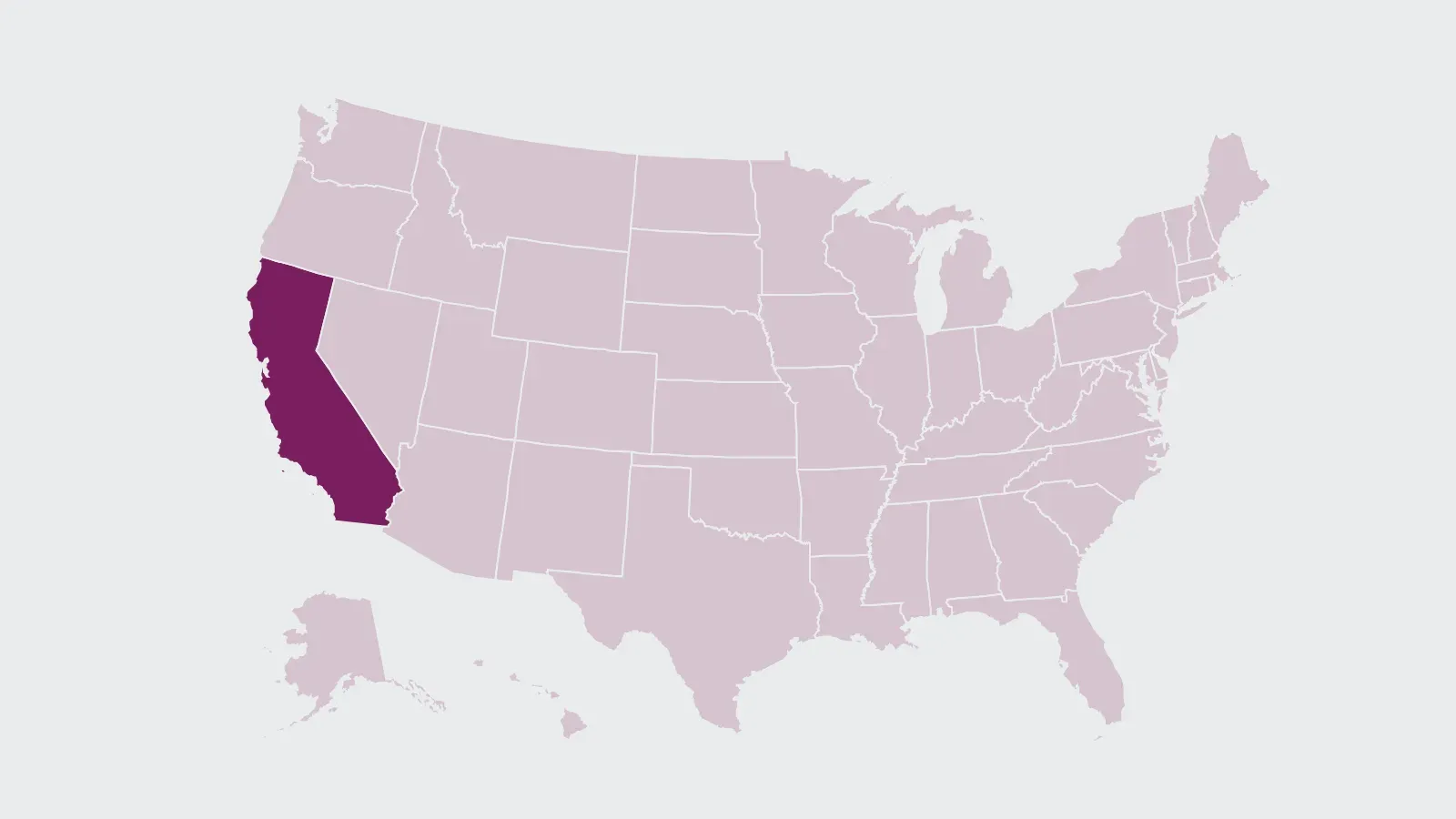
$1,223 average spend in 2023 (−5% vs. U.S.); full coverage $1,417; 30/60/15 minimum; no credit-based pricing.