Under $1,000 tier
What car insurance costs in New Hampshire
The average New Hampshire premium next to the national one, what the state's unusual insurance rule really means, and where the price can move.
By Guardbrook Editorial Team Updated 6 min read
At a glance
- Average yearly spend, 2023
- $987
- Change from 2022
- +12%
- Minimum liability limits
- 25/50/25 if insured
- Uninsured drivers, 2023
- 10.0%
Bottom line
New Hampshire drivers who carried insurance spent an average of $987 per insured car in 2023, about 23% less than the U.S. figure of $1,282; full coverage averaged $1,032. State law doesn't make most drivers buy a policy, but you must be able to pay for damage you cause, and a policy you do buy starts at 25/50/25 with $1,000 of medical payments and uninsured motorist coverage built in.
The New Hampshire bill, line by line
Guardbrook
Average car insurance bill, 2023
New Hampshire
Liability$482
Collision$391
Comprehensive$158
Full coverage$1,032
Average spend per car$987
Compared with the U.S.−23%
Uninsured drivers10.0%
Average yearly premiums per insured car (NAIC); uninsured share: Insurance Research Council estimate. Averages, not a quote. Where these numbers come from
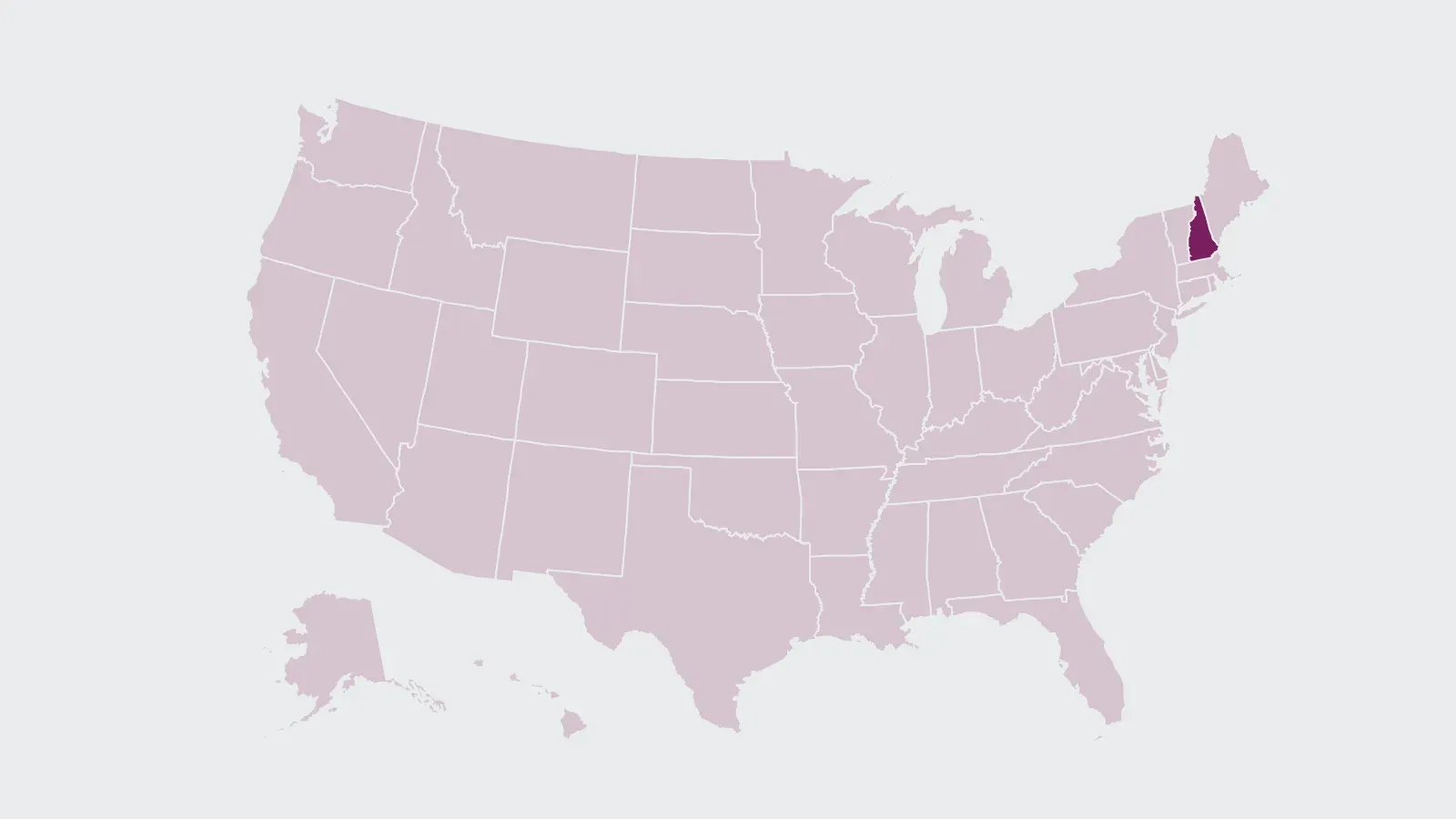
Price tier on the map
Under $1,000 a year
- Minimum liability limits
- Not required for most drivers; 25/50/25 if you buy a policy
- Financial responsibility rule; policies include $1,000 MedPay and UM at liability limits; SR-22 after DWI and some offenses
- Credit-based insurance scores
- Allowed
- New Hampshire Insurance Department consumer FAQ
- Regulator
- New Hampshire Insurance Department
The New Hampshire bill next to the U.S.
The National Association of Insurance Commissioners (NAIC) reports what insurers collected per insured car in every state. In 2023 the New Hampshire average was $987, up 12% from $881 a year earlier. That number divides total premium by insured cars, so it mixes bare liability policies with full coverage and leaves out cars with no policy at all. A car with all three main coverages averaged $1,032.
| Coverage | New Hampshire | United States |
|---|---|---|
| Liability | $482 | $737 |
| Collision | $391 | $464 |
| Comprehensive | $158 | $238 |
| All three (combined premium) | $1,032 | $1,438 |
| Average expenditure | $987 | $1,282 |
Each line sits below the national one: liability by about 35%, collision by about 16% and comprehensive by about 34%. A full-coverage car came in roughly 28% under the U.S. combined premium. The averages say nothing about one household, though; age, record, vehicle and town still decide your own price. See how where you live changes a quote.
Is car insurance required in New Hampshire?
The New Hampshire Insurance Department says plainly that state motor vehicle law does not require you to carry auto insurance. What it does require is financial responsibility: after an accident you cause, you must be able to show you can pay for the damage. If you can't, your driving privileges in New Hampshire may be suspended.
Some drivers lose the choice. The Division of Motor Vehicles may require proof of insurance on an SR-22 certificate after any DWI, after leaving the scene of an accident, or after a second reckless operation offense. Until the filing is in place, a license or registration can't be restored or kept. Our page on how your driving record sets a price explains how offenses like these feed into a quote.
- Liability: the lowest limits sold are 25/50/25, meaning $25,000 per injured person, $50,000 per accident for injuries and $25,000 for property damage.
- Medical payments: a personal policy must include at least $1,000 of this coverage, according to the Department.
- Uninsured motorist coverage must be provided at limits equal to your liability coverage, so raising one raises the other.
- Collision and comprehensive stay optional unless a lender or leasing company requires them.
How prices are reviewed in New Hampshire
The Department does not set or mandate auto insurance rates. It reviews and approves the rating plans that insurers submit and justify, and each company sets its own discounts; the Department notes that not all companies offer all of them. Two insurers can therefore price the same driver quite differently.
Insurers may adjust your rate to take your credit score into account, according to the Department's consumer FAQ. If a company's use of credit seems to work against you, ask which factors drove the result and compare with insurers that weigh credit differently. Our page on credit-based insurance scores covers what to ask.
If no company will sell you a policy
States run residual-market plans for drivers the voluntary market turns down, and AIPSO lists a "New Hampshire AIP" among the state plans it serves. A licensed agent can check whether you qualify and place the application. Ask what the plan would charge before you commit; our guide to assigned risk plans explains how they work and how to leave one.
Ways to pay less in New Hampshire
- Match the coverage before you compare. Ask each insurer for the same liability limits, medical payments amount and deductibles, since uninsured motorist coverage follows your liability limits automatically.
- Revisit optional extras. Rental reimbursement, roadside help and similar add-ons are worth a second look; our page on trimming optional coverages lists what not to cut.
- Ask about every discount. They are part of each insurer's rating plan and differ from company to company, so ask each one what it offers rather than assuming.
- Call the Department with problems. Consumer Services answers at 603-271-2261, or 800-852-3416 toll-free in state, and takes complaints about insurers and agents.
Questions drivers ask
Do I have to buy car insurance in New Hampshire?
Most drivers don't. The state requires financial responsibility instead: after an at-fault crash you must be able to pay for the damage or risk suspension. The DMV can require an SR-22 insurance filing after a DWI and certain other offenses.
What does the minimum New Hampshire policy include?
Liability of 25/50/25, at least $1,000 of medical payments coverage, and uninsured motorist coverage at the same limits as your liability coverage.
Is car insurance cheaper in New Hampshire than elsewhere?
On average, yes. NAIC data put 2023 spending at $987 per insured car against $1,282 nationally, and full coverage at $1,032 against $1,438.
Who regulates car insurance prices in New Hampshire?
The New Hampshire Insurance Department. It reviews and approves insurers' rating plans but does not set rates itself.
Where the figures come from
- NAIC — Auto Insurance Database Report 2022/2023 (state average premiums and expenditures)
- New Hampshire Insurance Department — Automobile Insurance Consumer Frequently Asked Questions
- New Hampshire DMV — Insurance requirements / SR-22
- AIPSO — New Hampshire plan listings
- Insurance Information Institute — Uninsured motorists (Insurance Research Council estimates)
Facts on this page were checked against these sources on October 26, 2026. NAIC averages are for 2023, the latest year the NAIC has published by state, and count only insured cars.
Have your rate shopped
Averages can't price your car and your record. Tell us the basics of your policy and Guardbrook passes them to licensed insurance agents and insurers who can quote it; you decide whether to switch.
- 1 Your cars, drivers and current policy.
- 2 How agents can reach you, and your consent.
- 3 A licensed insurance agent or insurer contacts you with quotes. Your policy stays as it is until you decide to switch.
Guardbrook is not an insurance company or agency and doesn't sell, quote or bind policies. You pay Guardbrook nothing; the licensed insurance agents and insurers who contact you set their own prices and terms. How we make money.
Read next
-
Price factor
Driving record
Tickets and at-fault crashes raise prices; OR and MD look back 3 years, CA Good Driver rates are 20%+ lower.
-
Way to save
Trimming optional coverages
Rental, roadside, gap, custom equipment and MedPay: what each pays, when to drop it, and what to keep.
-
Shopping guide
Assigned-risk plans
Turned down twice in Texas or Maryland? How state plans place you, what they cover and how to get back out.