$1,000–$1,249 tier
What car insurance costs in Kentucky
Kentucky's average premium against the national one, what the choice no-fault system means for your bill, and the discounts state law requires.
By Guardbrook Editorial Team Updated 6 min read
At a glance
- Average yearly spend, 2023
- $1,046
- Change from 2022
- +11%
- Minimum liability limits
- 25/50/25
- Uninsured drivers, 2023
- 14.1%
Bottom line
Kentucky drivers spent an average of $1,046 per insured car in 2023, about 18% less than the U.S. average of $1,282, and a car with liability, collision and comprehensive averaged $1,208. Every policy needs 25/50/25 liability and $10,000 of personal injury protection, unless you file a form rejecting the no-fault system. Insurers must cut premiums for drivers 55 and older who finish an approved accident prevention course.
The Kentucky bill, line by line
Guardbrook
Average car insurance bill, 2023
Kentucky
Liability$633
Collision$358
Comprehensive$218
Full coverage$1,208
Average spend per car$1,046
Compared with the U.S.−18%
Uninsured drivers14.1%
Average yearly premiums per insured car (NAIC); uninsured share: Insurance Research Council estimate. Averages, not a quote. Where these numbers come from
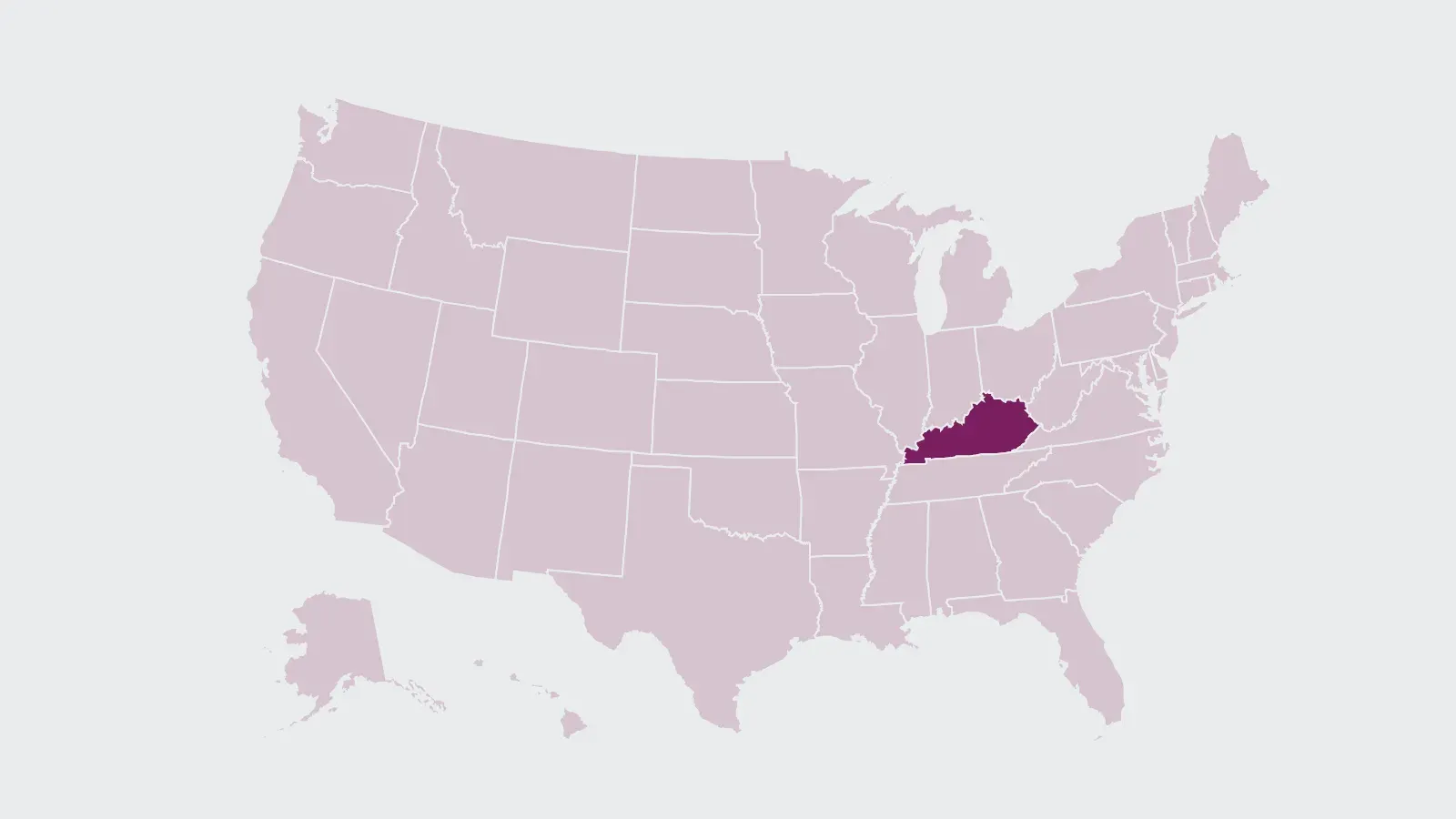
Price tier on the map
$1,000 to $1,249 a year
- Minimum liability limits
- 25/50/25 (or $60,000 single limit)
- Choice no-fault: $10,000 PIP unless the tort limits are rejected on a state form; UM unless rejected in writing
- Credit-based insurance scores
- Allowed, with limits
- Can't be the sole basis to decline or end coverage; life-event exceptions on request (KRS 304.13-075)
- Regulator
- Kentucky Department of Insurance
How Kentucky's average compares
The National Association of Insurance Commissioners (NAIC) publishes what insurers collected per insured car in each state. For 2023, the latest year available, the Kentucky average expenditure was $1,046, up 11% from $938 in 2022. That figure mixes minimum policies with full coverage; the combined premium for a car carrying all three main coverages was $1,208.
| Coverage | Kentucky | United States |
|---|---|---|
| Liability | $633 | $737 |
| Collision | $358 | $464 |
| Comprehensive | $218 | $238 |
| All three (combined premium) | $1,208 | $1,438 |
| Average expenditure | $1,046 | $1,282 |
Every Kentucky line is under the national average, by about 8% for comprehensive, 14% for liability and 23% for collision. Liability is still more than half of the full-coverage premium, so the limits you pick there move the total most. To see why two neighbors can pay very different amounts, read about age and driving experience.
Kentucky's minimum coverage and the no-fault choice
Kentucky requires liability of at least $25,000 per injured person, $50,000 per accident and $25,000 for property damage, or a $60,000 single limit. On top of that, the Motor Vehicle Reparations Act makes most vehicles carry basic personal injury protection (PIP), the state's no-fault coverage.
- Basic PIP pays up to $10,000 per person for medical bills, lost wages (up to $200 a week), replacement services and survivors' benefits, whoever caused the crash. It is optional for motorcycles, and you can buy more than the basic amount.
- The trade-off: a driver who keeps no-fault can't be sued for pain and suffering over a minor injury. A claim needs medical expenses over $1,000, a broken bone, a permanent injury or a death.
- Uninsured motorist coverage is included at $25,000/$50,000 unless the named insured rejects it in writing. Underinsured motorist coverage must be made available if you ask for it.
Kentucky lets you step out of the no-fault system by filing the Department of Insurance's rejection form. It takes effect when the department receives it and lasts until you revoke it in writing. The department warns of the cost: you lose basic PIP unless you buy it back, other people can sue you over smaller injuries, and your liability premium may go up. Before you decide, compare the price difference with what you give up; our page on limits and deductibles can help.
Rate filings and credit in Kentucky
KRS 304.13-051 sets a split system for personal lines. An insurer can put a rate change of up to 25% in any classification within 12 months into use and then file it within 15 days; a bigger change needs the commissioner's approval first, after a 30-day waiting period. Within those rules, each company sets its own prices.
Credit history can play a part in pricing, but under the same checklist an insurer or agent may not decline or end coverage based solely on your credit history or the lack of one. Under KRS 304.13-075, an insurer that uses credit must, on written request, consider an exception if your credit was hurt by events such as a serious illness or injury, the death of a spouse, child or parent, divorce, identity theft, a job loss lasting three months or more, or overseas military deployment. Our guide to credit-based insurance scores covers what you can check and correct.
The Kentucky Automobile Insurance Plan
Drivers who can't buy coverage in the regular market can turn to the Kentucky Automobile Insurance Plan, the state's assigned-risk pool. If an insurer cancels or refuses to renew your policy for a reason other than nonpayment, its notice must mention that you may be eligible for the plan and that you can ask the insurance commissioner to review the decision. For how these plans price and what they sell, see our guide to assigned-risk plans.
Discounts Kentucky requires, and other savings
- Use the mature-driver course. Under KRS 304.13-063, insurers must reduce the premium for at least three and up to five years for policyholders 55 or older who complete an approved accident prevention course (retaken every five years); members of the U.S. armed forces who complete a qualifying defensive driving course also get a reduction.
- Claim the anti-theft discount. Kentucky requires a discount on comprehensive coverage for qualifying anti-theft devices. See safety and anti-theft discounts.
- Price a PIP deductible. Insurers must offer PIP deductibles of $250, $500 or $1,000 on request, which lower the premium if you can cover that amount yourself.
- Get help from the state. The Department of Insurance's Division of Consumer Protection answers at 800-595-6053 (option 1) inside Kentucky and 502-564-3630 from out of state.
Questions drivers ask
How does Kentucky's car insurance cost compare with the U.S.?
It is lower on average. The NAIC put Kentucky's 2023 expenditure at $1,046 per insured car against $1,282 nationally; full coverage averaged $1,208 against $1,438.
What does choice no-fault mean in Kentucky?
By default you carry $10,000 of PIP and your right to sue for pain and suffering over minor injuries is limited. You can reject that system on a Department of Insurance form, but you then lose basic PIP unless you buy it back.
What is the minimum car insurance in Kentucky?
Liability of 25/50/25 or a $60,000 single limit, $10,000 of basic PIP, and uninsured motorist coverage of $25,000/$50,000 unless rejected in writing.
Do older drivers get a discount in Kentucky?
Yes. Insurers must give a premium reduction to policyholders 55 or older who complete an approved accident prevention course. See defensive driving discounts.
Where the figures come from
- NAIC — Auto Insurance Database Report 2022/2023 (state average premiums and expenditures)
- Kentucky Department of Insurance — Auto and homeowners insurance terms you need to know (2023)
- Kentucky Department of Insurance — No-Fault Coverage Uncovered
- Kentucky Department of Insurance — No-fault rejection form (Bulletin 2026-04)
- KRS 304.13-051 — Filing rates and rate information (Kentucky General Assembly)
- KRS 304.13-063 — Premium reduction for accident prevention courses (Kentucky General Assembly)
- KRS 304.13-075 — Exceptions to insurer's use of credit information (Kentucky General Assembly)
- Kentucky Department of Insurance — Personal auto review requirements checklist
- AIPSO — Kentucky Automobile Insurance Plan
- Insurance Information Institute — Uninsured motorists (Insurance Research Council estimates)
Facts on this page were checked against these sources on October 26, 2026. NAIC averages are for 2023, the latest year the NAIC has published by state.
Have your rate shopped
Averages can't price your car and your record. Tell us the basics of your policy and Guardbrook passes them to licensed insurance agents and insurers who can quote it; you decide whether to switch.
- 1 Your cars, drivers and current policy.
- 2 How agents can reach you, and your consent.
- 3 A licensed insurance agent or insurer contacts you with quotes. Your policy stays as it is until you decide to switch.
Guardbrook is not an insurance company or agency and doesn't sell, quote or bind policies. You pay Guardbrook nothing; the licensed insurance agents and insurers who contact you set their own prices and terms. How we make money.
Read next
-

Price factor
Age and driving experience
Teens have almost 3x the fatal crash rate of drivers 20+; HI, MA and NC limit age rating. Course discounts from 55.
-
Way to save
Safety and anti-theft discounts
New York requires 5 equipment discounts and Kentucky one on comprehensive. What counts and what it is worth.
-

Shopping guide
Reading your declarations page
Drivers, cars, limits such as 50/100/50, deductibles, rejected coverages, required discounts and the premium.